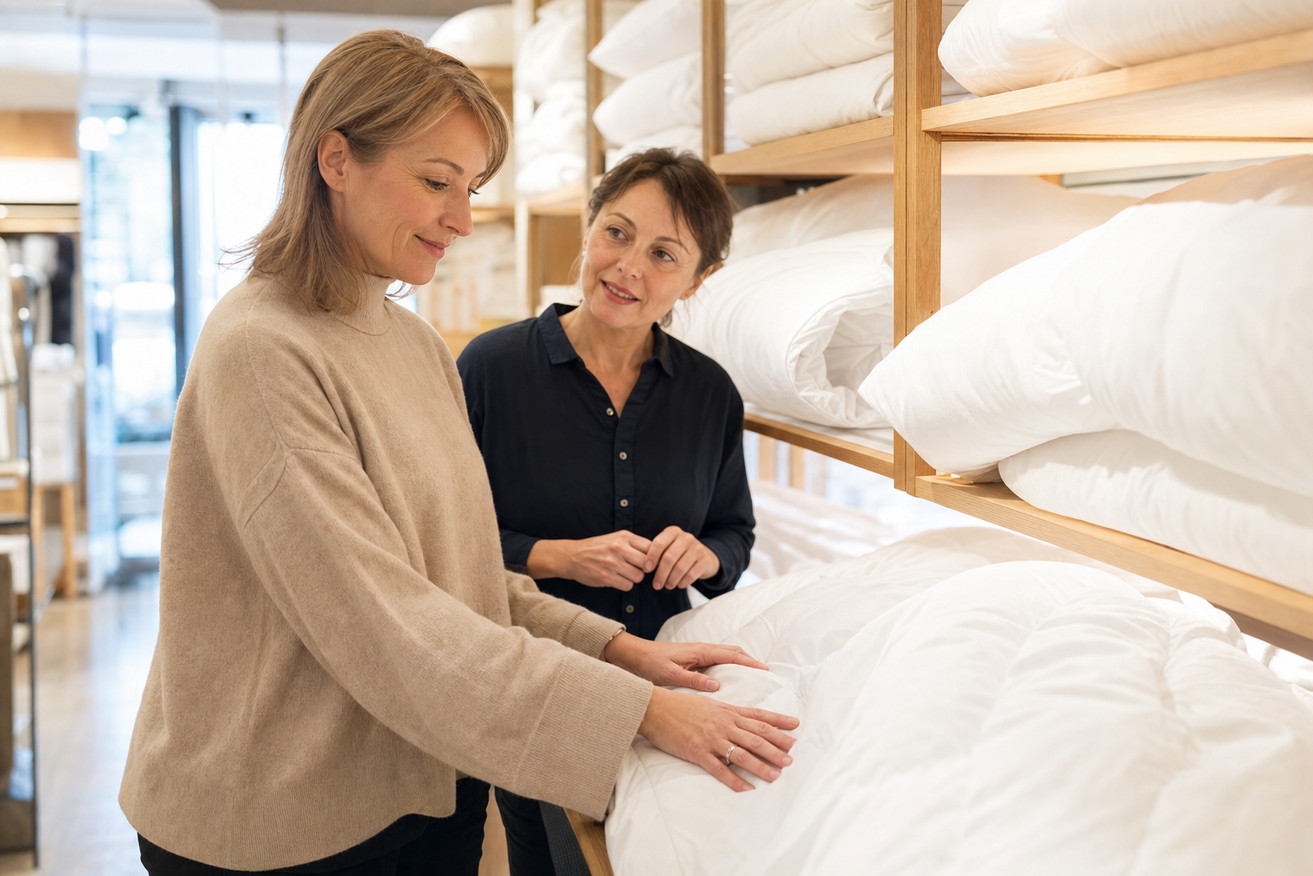
In a bedding aisle, customers first buy what they can see and what they can touch. For a duvet or pillow, packaging is not just a container: it is the first salesperson. It protects, informs, reassures and, above all, makes the product desirable.
After more than 30 years designing packaging for bedding manufacturers, one thing is clear to us: poor packaging can lose a sale that was already halfway won.
Softness sells through sight and touch
A duvet or pillow is sold on a sensory promise: comfort. Yet in store, customers do not sleep on the product. They look, touch and compare. Packaging must therefore suggest volume, softness and filling quality before the customer even reads the price.
This is why transparent windows, touch zones and materials that follow the product shape are decisive. Packaging that crushes the product or hides its volume sends the wrong message: a low-end product. By contrast, packaging that enhances loft raises perceived value immediately.
Packaging carries the brand, not only the product
When a bedding manufacturer delivers duvets to a retailer, whether a mass-market chain or a home linen specialist, packaging becomes the brand’s flag in the aisle. This is where custom bedding packaging makes a real difference.
Custom packaging in the retailer’s colours and logo strengthens brand consistency and customer trust. This is an expected standard in premium markets, especially in Germany, where average baskets are higher and finishing expectations are stronger.
The 2026 packaging trends bedding brands cannot ignore
Packaging is entering a more strategic phase in 2026, at the crossroads of regulation, brand image and waste reduction, as highlighted by Antalis. Three movements directly affect bedding packaging:
- Premium through simplicity. Minimalism is becoming stronger: less material, cleaner graphics and a design that lets the product speak for itself.
- Sustainability as an expectation, not an option. Recycled or recyclable materials, optimized formats and anticipated regulatory compliance are becoming part of the brief.
- Narrative packaging. Packaging that tells a story helps compensate for the impossibility of testing the product, both in store and online. For sleep-related purchases, emotion matters.
The polybag: a false friend for value
The temptation is familiar: replacing carefully designed packaging with a simple polybag to save a few cents. For entry-level products, the calculation may seem to work. But as soon as a brand targets the mid-range or premium segment, a basic polybag can destroy perceived value faster than it reduces cost.
The real question is therefore not “how much does the packaging cost?”, but “how much margin does the packaging protect?”.
From need to manufactured packaging: the real work
Designing the right duvet packaging or pillow packaging means translating a product, a brand and a market into packaging that can be manufactured at scale, at the right price and with the right quality.
This means selecting the right materials, validating prototypes, managing production in Asia, transport, customs and quality control. This is exactly what Accent Diffusion has been doing since 1994: turning an idea into reliable custom packaging, ready for the shelf for bedding manufacturers in France, Germany and across Europe.
Sources: Antalis — packaging trends 2026 · Graphiste.com — packaging trends · DHL — sustainable packaging trends. Hero image generated by AI for business context, without an Accent Diffusion product.